Loading...
Serving Pueblo West, CO and surrounding areas. (719) 618-9604
Most Pueblo West homes were built before today's insulation standards - and that gap shows up in your energy bills every month. Retrofit insulation adds the thermal protection your home needs, without a major renovation, and usually within a single day.
Retrofit insulation in Pueblo West means adding insulation to a home that is already built - without tearing out walls or starting from scratch - by blowing, spraying, or rolling new material into your attic, walls, or crawl space, with most attic jobs completed in a single day.
The homes most likely to benefit are those built in the 1980s and 1990s, when Pueblo West was growing quickly and insulation standards were considerably lower than what is recommended today. If your home dates from that era and has never had an insulation upgrade, there is a strong chance your attic is the single biggest source of heat loss - and the fastest fix available. The U.S. Department of Energy recommends significantly higher insulation levels for this climate zone than were standard when most Pueblo West homes were built. Pairing retrofit insulation with our home insulation assessment gives you a clear picture of every area that needs attention before any work begins.
One important distinction: adding insulation on top of a leaky attic floor is not enough. Air moves through gaps that insulation cannot stop - it slows heat transfer but does nothing to block airflow. That is why every retrofit insulation project we do includes air sealing as the first step. Skipping that step is one of the most common reasons homeowners pay for insulation upgrades and still feel drafts.
If your energy bills jump sharply from October through February and you cannot point to a reason why, your home is likely losing heat faster than your furnace can replace it. In Pueblo West, where winter nights can drop well below freezing and wind chill makes it feel even colder, a poorly insulated attic or wall cavity is one of the most common culprits. This is especially true in homes built before 2000, when insulation standards were much lower than they are today.
If one bedroom is always freezing in January or your living room bakes in July no matter how long the AC runs, uneven insulation is often the cause. Heat moves toward cold - so in winter, it escapes through your ceiling, walls, and floors wherever insulation is thin or missing. Rooms at the ends of the house or directly under the roof tend to show this problem first.
Hold your hand near an electrical outlet on an exterior wall on a cold day - if you feel a draft, air is moving through gaps in your wall insulation. This is a sign that your walls either have very little insulation or that the insulation has settled and left gaps over the years. It is a quick, no-tools test any homeowner can do before calling a contractor.
Pueblo West summers regularly push past 95 degrees, and an attic without adequate insulation can reach extreme temperatures on a hot afternoon. That heat radiates down through your ceiling and into your living space, making your air conditioner work overtime. If your upstairs is consistently warmer than your downstairs in summer, your attic insulation is almost certainly part of the problem.
Ice dams - ridges of ice that form at the edge of your roof after a snowfall - are a classic sign that heat is escaping through your attic and melting snow unevenly. In Pueblo West, where freeze-thaw cycles are common through the winter months, ice dams can cause water to back up under your shingles and leak into your home. If you have seen this happen, your attic insulation and air sealing need attention.
Every retrofit insulation project begins with a measurement of what is already in your home - not a guess. We identify how much insulation is present, where air leaks exist that need to be sealed first, and whether any moisture or pest issues need to be addressed before new material goes in. For most Pueblo West homes, blown-in insulation in the attic is the highest-priority upgrade and delivers the fastest return. For crawl spaces and rim joists, spray foam is often the better choice because it handles air sealing and insulation in one step. Our spray foam insulation service covers those applications in detail, including closed-cell options for moisture-sensitive areas.
We also check rebate eligibility before the job starts - not after - so if Xcel Energy or Black Hills Energy programs apply to your project, you know upfront. The North American Insulation Manufacturers Association sets the product standards we follow, and the materials we install meet the thresholds required for federal tax credits currently available to homeowners.
The most common retrofit choice for Pueblo West homes - fast installation, high R-value coverage, and minimal disruption to your living space.
Spray foam or batt insulation applied to crawl space walls or the underside of the floor above - the right choice when ground moisture and cold floors are the main problem.
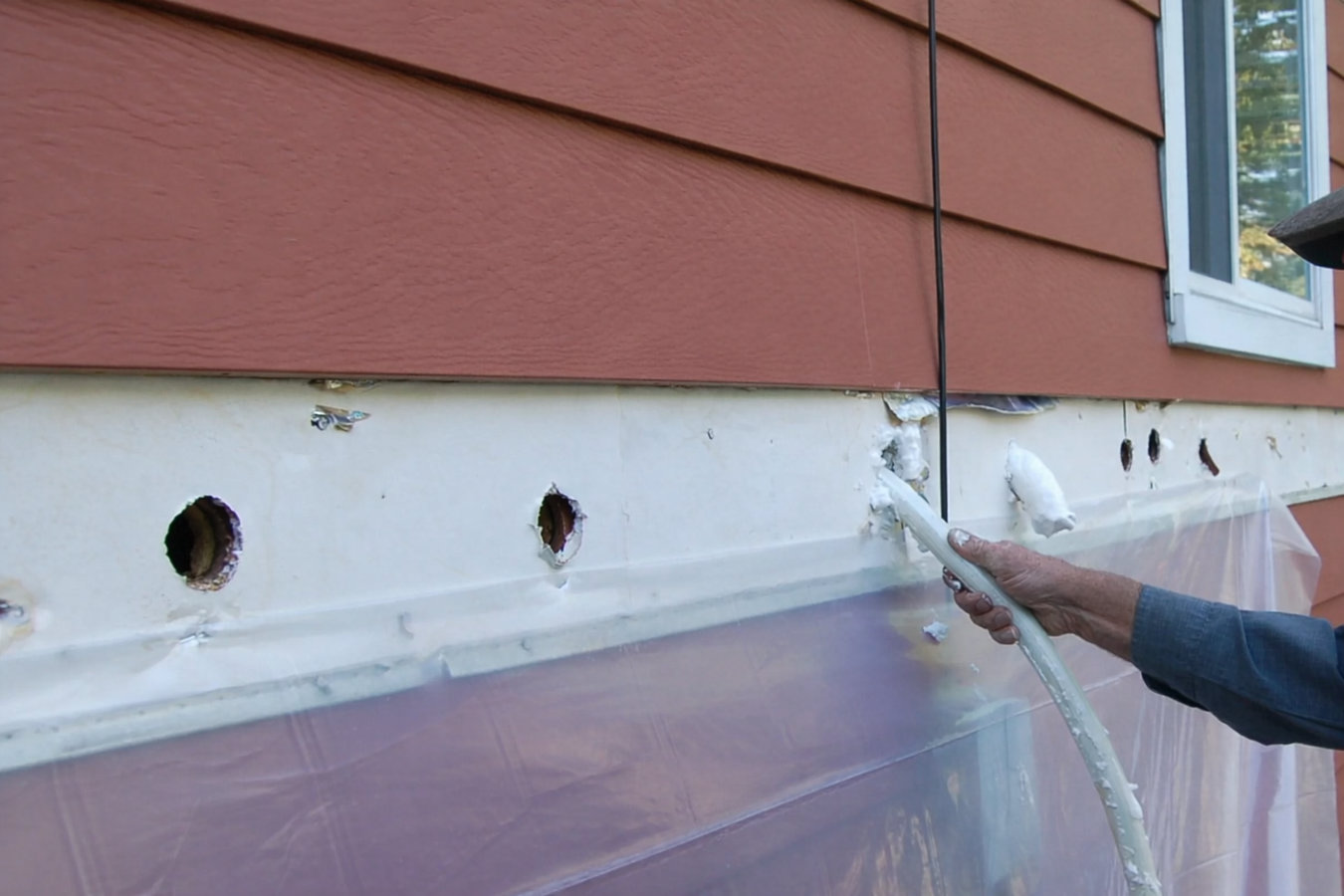
Blown insulation packed into existing wall cavities through small holes - a way to add wall R-value without tearing out drywall or siding.
Spray foam applied to the band of framing where your foundation meets the floor structure - one of the most cost-effective spots to seal in older Pueblo West homes.
Pueblo West sits at roughly 4,700 feet elevation and sees temperature swings that put constant stress on your home's thermal envelope - summer highs regularly pushing past 95 degrees, winter nights dropping below zero, and freeze-thaw cycles throughout the colder months. Insulation that might be adequate in a milder climate simply does not cut it here. The housing stock compounds the problem: a large share of homes in the community were built during the rapid growth of the 1980s through early 2000s, when the required insulation levels were considerably lower than what is needed to actually perform in these conditions. If your home has never had an insulation upgrade, there is a real chance it is underperforming on both the coldest and hottest days of the year. Homeowners in Pueblo West consistently see the gap between their bills and what neighbors with upgraded homes pay.
Pueblo West's semi-arid, high-desert climate also creates unique risks in crawl spaces that a good retrofit insulation contractor will flag before adding any material. Soil moisture from irrigation, monsoon-season rain, and temperature swings can create condensation in uninsulated or poorly insulated crawl spaces. A contractor who skips a crawl space moisture check before installing insulation is covering up a problem rather than solving it. Homeowners in Colorado City face similar conditions, where the dry surface climate can mask crawl space moisture until it has already caused damage.
We respond within 1 business day. You will be asked a few basic questions - the age of your home, what areas you are concerned about, and whether you have noticed any specific problems. You do not need to have any answers prepared; the assessment is where the real information gathering happens.
A contractor walks through your home and inspects the areas most likely to need attention - usually starting with the attic. We measure how much insulation is already there, check for air leaks around pipes and fixtures, and look for any moisture or pest issues that need to be addressed before new insulation goes in. This visit typically takes 30 to 60 minutes.
After the assessment, you receive a written quote that breaks down what work is recommended, what materials will be used, and the total cost. If rebates through Xcel Energy or Black Hills Energy apply to your project, we will flag that in the estimate so you know what financial benefits are available before you decide.
On the day of work, the crew seals any air leaks identified during the assessment, then installs the insulation. Blown-in attic jobs are typically done in a few hours. The crew cleans up before they leave and walks you through what was done so you know exactly what is in your home and what to expect on your next energy bill.
Free in-home assessment, written estimate, no pressure - we measure what is there and tell you exactly what will make the biggest difference.
(719) 618-9604Gaps around pipes, wiring, and ceiling fixtures let air bypass insulation entirely - and if those are not sealed first, you will still feel drafts even after new material is in. Every retrofit insulation project we do includes an air-sealing assessment before a single bag of blown-in material is installed. The{" "}Building Performance Institute{" "}standards we follow require this sequence.
You get a free written estimate before any work starts, and we document the job from start to finish. We have completed retrofit insulation projects across Pueblo West and the surrounding communities for years.
A large share of homes in Pueblo West were built during the rapid growth of the 1980s and 1990s, when insulation standards were considerably lower than today's recommendations. We know exactly what those homes typically have, where the gaps tend to be, and how much material is needed to bring them up to a level that actually performs in this climate. That local knowledge shows up in the accuracy of our estimates and the quality of our installs.
Pueblo West homeowners served by Xcel Energy or Black Hills Energy may qualify for cash rebates on qualifying insulation work - but those rebates require the right materials and the right paperwork. We check your eligibility before the job starts, not after, so you do not leave money on the table because of a missed deadline or the wrong product choice.{" "}ENERGY STAR{" "}criteria inform the materials we recommend.
The difference between a retrofit insulation job that works and one that disappoints is almost always in what happens before the material goes in - the measurement, the air sealing, and the rebate check. Those steps are standard with us, not optional add-ons.
Spray foam is the go-to material when retrofit insulation needs to seal air leaks and add R-value at the same time - rim joists, crawl space walls, and irregular spaces.
Learn MoreA full-home insulation assessment that looks at every area - attic, walls, crawl space, and basement - to prioritize where retrofit upgrades will have the most impact.
Learn MoreWe are booking jobs now - lock in your date before the next cold snap hits and utility rebates are still available.