Loading...
Serving Pueblo West, CO and surrounding areas. (719) 618-9604
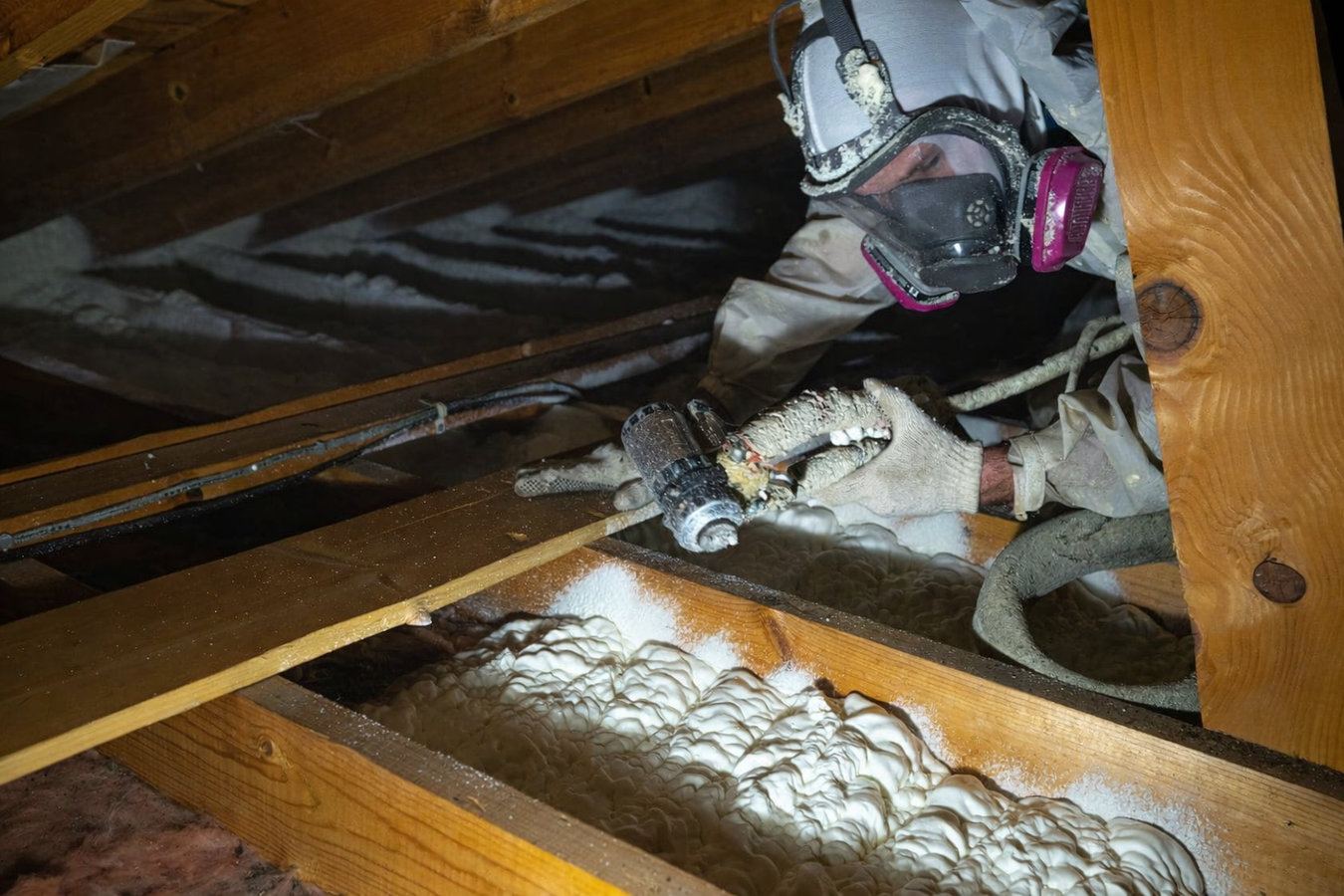
Hidden gaps in your attic floor let conditioned air escape every hour your system runs. Professional attic air sealing closes those gaps with foam and caulk - so your home holds temperature and your heating and cooling bills finally reflect the work.
Attic air sealing in Pueblo West means finding and plugging the gaps, cracks, and openings in your attic floor that let conditioned air escape and outside air sneak in - work done with spray foam, caulk, and rigid materials, with most jobs completed in a single visit of two to six hours.
Many Pueblo West homeowners assume more insulation is the answer to a drafty or expensive-to-heat home. But insulation alone cannot stop air from moving through gaps. Air sealing closes those gaps first, then insulation does its job of slowing heat transfer. The U.S. Department of Energy identifies air sealing as one of the most cost-effective improvements a homeowner can make - and when combined with our retrofit insulation service, the results are far better than either one alone.
The most common gaps are not obvious from below: they are around recessed light fixtures, plumbing pipes rising through the attic floor, the tops of interior walls, and the attic hatch or pull-down staircase. These spots are often left completely open in homes built during Pueblo West's growth years in the 1990s and early 2000s - and they have been costing you money on every energy bill since.
If your upstairs rooms feel noticeably colder when Pueblo West's winds pick up, outside air is almost certainly entering through gaps in your attic floor. Wind-driven infiltration is a real problem in this area - on a gusty day, unsealed attic gaps act almost like open vents. This is one of the clearest signs that air sealing work is overdue.
If the bedroom directly below the attic is always too hot in summer and too cold in winter no matter how you adjust the thermostat, conditioned air is escaping through the ceiling. In Pueblo West, where summer attic temperatures can exceed 140 degrees, an unsealed attic floor acts almost like a heat source pressing down on your living space. Addressing this is one of the most common reasons homeowners call for air sealing.
Stand under your attic access panel on a cold or windy day and hold your hand near the edges - if you feel cool air moving, that gap is letting outside air directly into your home. The same test works near recessed light fixtures in the ceiling, which are a very common source of air leakage in homes built in the 1990s and 2000s. These are easy to feel and easy to fix once a contractor knows where to look.
Pueblo West's high desert climate means the air outside is very dry and often carries fine dust, especially on windy days. If outside air is infiltrating through attic gaps, it brings that dry, dusty air with it - making your home feel perpetually dry and causing dust to settle faster. If you notice this pattern getting worse after windy days, air infiltration from the attic is a likely contributor.
Every attic air sealing project starts with a thorough assessment - not just a glance from the hatch opening. We access the full attic floor and work through every category of opening: pipes and conduit penetrations, recessed light boxes, the tops of interior walls where air bypasses are common, and the attic hatch or stair opening itself. Foam is applied to larger gaps, caulk to smaller cracks, and rigid materials where needed around structural openings. For homeowners who want a complete energy upgrade, pairing attic air sealing with our whole-home air sealing services addresses leakage at the rim joists, basement walls, and other areas that contribute to the same drafty-home symptoms.
A blower door test before and after the work is available on request and gives you a measurable before-and-after comparison rather than just a contractor's word that the job went well. We also document the work with photos and provide the paperwork needed for Black Hills Energy rebates and federal tax credits - so the financial side of the project is straightforward from start to finish.
Best for most Pueblo West homes - gaps around pipes, wires, recessed lights, and wall tops sealed with foam and caulk before any insulation is added or updated.
A focused fix for homes where the pull-down attic staircase or hatch cover is the biggest single source of conditioned air loss - fast and high-impact.
Full treatment of all penetrations in the attic floor - the right choice for homes that have never been air sealed and want a complete, documented result.
Pueblo West sits at roughly 4,700 feet elevation and sees some of the most dramatic temperature swings in Colorado - summer highs regularly exceed 95 degrees while winter nights can drop well below zero. That range means your attic is constantly expanding and contracting, which widens gaps over time and makes air sealing both more urgent and more impactful here than in milder climates. The area is also one of the windiest in Colorado, and wind-driven air infiltration through unsealed attic gaps can make your home feel drafty even when your heating system is running at full capacity. Homeowners in Pueblo West feel this effect on every gusty day from fall through spring.
Pueblo West also grew rapidly through the 1990s and 2000s as an unincorporated community, and many homes from that era were built to minimum standards with less attention to air sealing details. Gaps around recessed lights, plumbing chases, and attic hatches were commonly left open because the code at the time did not require them to be sealed. If your home was built during that growth period and has never had an energy assessment, the gaps are almost certainly there. Homeowners in nearby Pueblo face similar housing stock conditions, and the same approach applies - seal first, then insulate.
We respond within 1 business day. You will be asked a few basic questions - the age of your home, any comfort issues you have noticed, and whether anyone has recently worked in your attic. This helps us come prepared with the right materials and a realistic time estimate.
A technician accesses your attic and inspects for gaps, open penetrations, and areas where air is clearly moving. Many contractors also use a blower door test at this stage to depressurize your home so leaks become easier to find. You receive a written estimate before any work begins.
The technician works through the attic systematically, applying foam and caulk to seal gaps around pipes, wires, light fixtures, wall tops, and any other openings in the attic floor. You can be home during the work - there is minimal noise and no fumes that reach your living space under normal conditions.
Once sealing is complete, we walk you through what was done - either in person or with photos - so you can see exactly where gaps were found and how they were addressed. We provide the documentation you need if you are applying for a Black Hills Energy rebate or a federal tax credit.
Free assessment, written estimate, no obligation - we explain what we find before any work begins.
(719) 618-9604Every project starts with a clear written quote that specifies what will be sealed, what materials will be used, and the total cost. No surprises after the job starts. If a permit is needed because the project involves significant insulation or HVAC work alongside the sealing, we handle that with Pueblo County on your behalf.
You get a free written estimate before any work starts, and we document the job from start to finish. We have completed attic air sealing projects across Pueblo West and surrounding communities, so we know how these homes are built.
Pueblo West grew rapidly through the 1990s and early 2000s, and homes from that era have predictable air leakage patterns - recessed lights, plumbing chases, and attic hatches that were never sealed. We know exactly where to look in these homes and come prepared for what we typically find. A technician unfamiliar with this housing stock will miss gaps a local crew finds routinely.
Black Hills Energy and federal tax credits can meaningfully reduce your project cost - but collecting those benefits requires the right documentation. We are familiar with the current Black Hills Energy rebate programs and provide the paperwork you need to apply.{" "}ENERGY STAR{" "}criteria inform the materials and methods we use on every job.
These are not abstract claims - they are the things that separate a job done right from one that leaves gaps behind. When you call us, you get a contractor who knows Pueblo West homes, handles the permit and rebate paperwork, and gives you documentation you can keep.
Air sealing works best when paired with updated insulation - retrofit insulation adds the thermal layer that makes the sealed gaps pay off faster.
Learn MoreWhole-home air sealing that goes beyond the attic - rim joists, basement walls, and other leakage points addressed in a single project.
Learn MoreBeat the next heating season - most jobs are completed in a single visit, and Black Hills Energy rebates may be available right now.