Loading...
Serving Pueblo West, CO and surrounding areas. (719) 618-9604
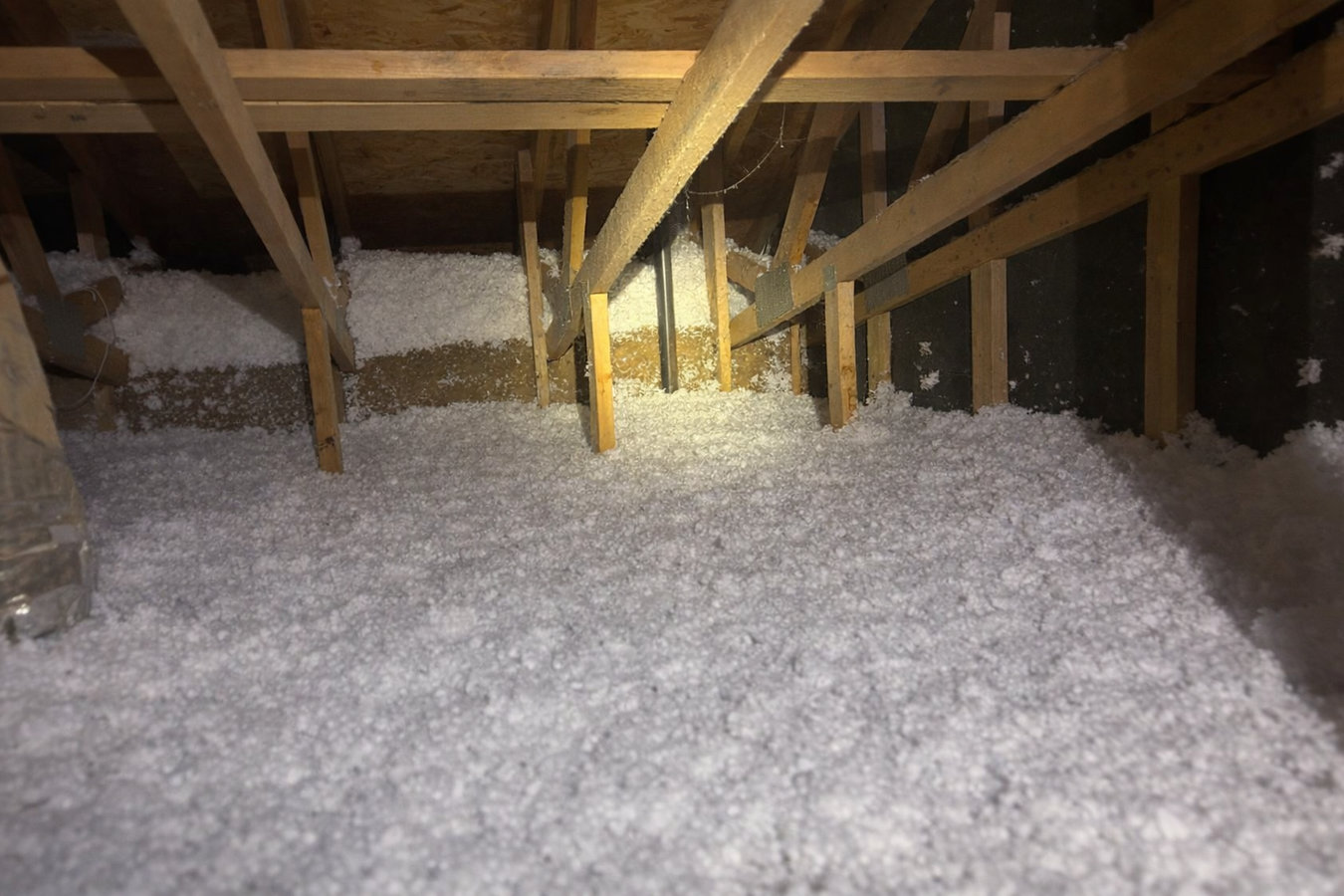
Loose-fill insulation fills every corner batt rolls miss - giving Pueblo West homes a tighter thermal barrier and real savings on heating and cooling.
Blown-in insulation in Pueblo West means loose fiberglass or cellulose material blown into your attic through a large hose, filling gaps and corners that rigid batt rolls simply cannot reach - most attic jobs are finished in two to four hours with no disruption to your living space.
If your home has uneven room temperatures or a heating bill that climbs every winter, thin or patchy attic coverage is usually the reason. Blown-in insulation is especially effective in Pueblo West because the loose material conforms to irregular framing layouts common in homes built between the 1970s and 2000s. For a full home upgrade that goes beyond the attic, see our home insulation service.
The U.S. Department of Energy recommends Colorado attics reach R-49 to R-60 - roughly 14 to 18 inches of blown-in material - to handle the wide temperature swings at Pueblo West's 4,700-foot elevation.
If your gas or electric bill climbs sharply from October through February without any change in your habits, heat is likely escaping through your attic. In Pueblo West, where winter nights can drop into the single digits, an under-insulated attic can account for a large share of that lost heat. This is one of the most common and most overlooked reasons homes feel expensive to heat.
When one bedroom or hallway feels noticeably colder in winter or hotter in summer than the rest of the house, it usually points to uneven insulation coverage directly above it. Pueblo West's wide temperature swings - from 95-degree summers to sub-zero winter nights - make these hot and cold spots especially obvious. A room that bakes in August and freezes in January is a strong signal that insulation above it is thin or missing.
If you peek into your attic and can see the wooden beams running across the floor, your insulation is almost certainly below the level recommended for this climate. Properly insulated attics in Colorado should have enough material that the joists are completely buried and not visible. This is a quick visual check anyone can do with a flashlight.
A large portion of Pueblo West's homes were built in the 1980s and 1990s under older building codes that allowed for less insulation than what is recommended today. If your home is in that age range and you have never had insulation upgraded, there is a good chance you are living with a significant gap between what you have and what would keep your home comfortable year-round.
We install blown-in insulation using both fiberglass and cellulose - two materials that perform well in Pueblo West's dry, high-elevation climate. Fiberglass holds its shape well over time and resists settling, making it a strong choice for attics that need long-term stability. Cellulose insulation, made from recycled paper treated for fire and pest resistance, fills irregular cavities tightly and is a good fit for homes with complicated attic layouts or older framing. For walls in existing homes, we also offer dense-pack blown-in installation - a technique that adds insulation without removing drywall. If your project also needs wall insulation, we can assess both the attic and wall cavities in the same visit.
Every blown-in job starts with measuring what is already in your attic so we know exactly how much material is needed to reach the recommended depth. Before blowing in new material, we seal gaps around light fixtures, plumbing penetrations, and attic hatches - spots where warm air leaks out in winter. Skipping that air-sealing step limits how much you will actually save, which is why we include it as part of every assessment.
The most common application - fills the attic floor to the recommended depth for homeowners with thin or aging coverage.
Adds insulation to existing wall cavities through small access holes - ideal for older homes where walls were never insulated.
Best suited for homeowners who want long-term dimensional stability with minimal settling over time.
A good fit for homes with irregular framing or tight attic spaces where dense coverage matters most.
Pueblo West sits at roughly 4,700 feet on the high plains of southern Colorado, where summer highs regularly push past 95 degrees and winter nights can drop well below zero. That is a swing of more than 100 degrees across the year, which means your attic insulation works hard in both directions - keeping heat out in July and keeping it in during January cold snaps. The dry, semi-arid climate also accelerates settling in blown-in material, which is why contractors in this area often recommend checking attic depth every 10 to 15 years. Homeowners near Pueblo, CO face the same conditions and benefit from the same upgrades.
Much of Pueblo West was developed from the 1970s through the early 2000s, and homes from that era were often insulated to standards that have since been updated. A house that was considered well-insulated when it was built may now fall short of what is recommended for this climate. Residents in communities like Avondale, CO face similar housing-stock conditions and often find that an attic upgrade makes a noticeable difference in both comfort and energy cost. Black Hills Energy, which serves most of Pueblo West with natural gas, has historically offered rebates for insulation upgrades - ask us about current programs when you call.
We respond to new requests within 1 business day. When you reach out, we ask about your home's square footage, age, and what prompted the call - so we arrive prepared and can give you a realistic cost range before the visit.
A crew member comes to your home, accesses the attic, and measures the existing insulation depth. They check for air leaks around fixtures and vents and note anything that could affect the job. This visit typically takes 30 to 45 minutes and ends with a written quote.
We set up a blowing machine in your driveway or garage and run a hose into the attic. One person guides the hose inside while another feeds material. Most attic jobs wrap up in two to four hours. Your living space stays clean and undisturbed throughout.
Once material is in place, we measure the depth at multiple points and leave a measuring ruler in the attic so you can verify it yourself anytime. We clean up the access area before we leave and provide documentation you can use for federal tax credit or Black Hills Energy rebate applications.
Free estimate, no obligation. We respond within 1 business day.
(719) 618-9604After every blown-in job, we leave a measuring stick in your attic so you can verify the finished depth yourself. You do not have to take anyone's word for it - the proof stays in your attic permanently.
We seal gaps around fixtures, vents, and penetrations before any material goes in. The North American Insulation Manufacturers Association identifies air sealing as a required step for a complete installation - skipping it limits the savings you will actually see.
We know the housing stock in this community - the ranch-style homes from the 1980s and 1990s, the attic layouts that require extra care around HVAC equipment, and the county permit requirements that apply to different scopes of work.
Every quote we provide lists the material type, the target finished depth, and whether air sealing is included - so you can compare it line-for-line with any other estimate. Vague quotes are a common way homeowners end up with less insulation than they paid for.
These are not just talking points - they are the specific things that protect you from a job that looks complete from the outside but falls short on performance. If you have questions about what to look for when comparing contractors, we are happy to walk you through it.
A full-home insulation assessment and upgrade covering attic, crawl space, and walls in one coordinated project.
Learn MoreDense-pack blown-in insulation for existing walls - no drywall removal required in most cases.
Learn MoreWinter arrives fast at this elevation. Lock in your installation date before the busy season fills up.